
Double Seven
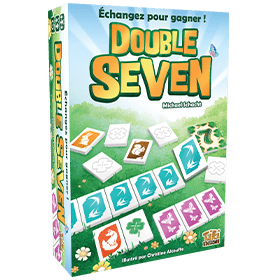 Double Seven es una versión moderna del clásico juego de estilo rummy. El objetivo es reunir grandes conjuntos de animales para sumar puntos, pero no hay que ser demasiado exigente con los animales que se recogen, ya que se pueden intercambiar conjuntos con otros jugadores para conseguir aquellos que permitan ampliar la colección.
Al expandir una familia, si la llevas a siete o más losetas, coge una ficha de 7 de la reserva. La segunda vez que cojas una ficha de 7, coge también la ficha de 77, tras lo cual cada jugador realiza un turno final.
Anota 1 punto por cada loseta que tengas frente a ti en la mesa, además de 1 punto por cada 7 en las fichas que hayas reclamado. Gana quien tenga más puntos.
Número de jugadores: 2 - 4
Duración de la partida: 8 mn
Complejidad: 1 / 5
Juega Double Seven y 1414 otros juegos en línea.
No es necesaria ninguna descarga - juega directamente desde tu navegador.
Con tus amigos y con miles de jugadores del mundo entero.
Libre.


Juega Double Seven y 1414 otros juegos en línea.
No es necesaria ninguna descarga - juega directamente desde tu navegador.
Con tus amigos y con miles de jugadores del mundo entero.
Libre.
Sumario de reglas
Perspectiva general
Double Seven es un juego en el que haces conjuntos a partir de fichas a juego (similar a Rummikub), pero en lugar de números y colores, estás coleccionando familias de animales. Específicamente, familias de siete. Cuando termina el juego, los puntos se recuentan de las familias que cada jugador logró hacer, y el primer y segundo jugador para hacer un conjunto de siete.
Hay 91 fichas en el juego: 8 familias de animales diferentes con 11 fichas cada una, además de tres fichas de trébol que actúan como salvajes.
Jugabilidad
Cada jugador comienza con tres fichas delante de ellos. Una baldosa está boca arriba en el centro, junto a una baraja de baldosas boca abajo.
En cada turno, los jugadores seguirán cuatro fases que consisten en dibujar fichas, intercambiar fichas y colocarlas en familias.
1. Dibujar azulejos
Antes de que comience el giro, si no hay baldosas en el área boca arriba, se coloca una allí.
Toma dos azulejos. Puedes tomar cualquiera de ellos de la cubierta boca abajo o las baldosas boca arriba en el centro.
Si comienzas tu turno con un estante vacío, toma tres fichas en su lugar.
¡Arco iris!: Si después de terminar de dibujar (y antes de colocar fichas) tienes cinco o más fichas de todos los colores diferentes, Y sin Jokers, Y ninguno de ellos es del mismo color, entonces puedes declarar "¡Arco Iris!" Si haces esto, puedes dibujar un mosaico adicional.
2. Acciones
Puedes realizar tantas de las siguientes acciones como quieras en cualquier orden:
Nombre Descripción Notas
Comende una familia Coloca al menos dos animales idénticos (o un animal más un trébol (baldosa salvaje)) en tu área de juego. Solo puedes tener una familia por especie animal.
Ampliar una familia Añade fichas de animales a juego (o fichas de trébol)
Intercambiar una familia Intercambia a una de tus familias con la familia de un oponente. Las familias deben ser del mismo tamaño. Después de un intercambio, puede terminar con dos familias del mismo tipo de animal, pero estas no se pueden fusionar.
Agarra un trébol Reemplaza una ficha de Clover en cualquier familia (incluida la de tus oponentes) con el animal a juego de tu estante. El azulejo Clover vuelve a tu estante.
Dos por uno Deseche dos fichas de su estante al área boca arriba para tomar una baldosa de la cubierta boca abajo o de la pila boca arriba. Solo puedes hacer esto una vez por turno.
Tenga en cuenta: Las familias no se pueden dividir ni fusionar.
"¡Siete!" Y "Double Seven"
Cada vez que una de sus familias alcance 7 fichas, se le dará una ficha. Esto vale un punto.
El primer jugador que tenga dos familias con siete fichas recibirá una ficha, que vale dos puntos. También activa el final del juego, donde cada otro jugador tendrá un turno final.
3. Fin del turno
Tu turno termina si tu rack está vacío o eliges terminar tus acciones.
Si tienes más de cinco fichas en tu rack, una ficha será descartada y eliminada del juego.
Fin del juego y puntuación
Cuando un jugador tiene dos familias de siete fichas, recibe la ficha. Luego, todos los demás jugadores dan un giro final. Cuando esto se hace, los puntos de cada jugador se suman.
Cada azulejo en sus familias = 1 punto
Ficha = 1 punto
Ficha = 2 puntos
¡El jugador con más puntos gana! En un empate, el titular de la ficha gana.